

Dog Hair Fall: Causes & How to Reduce Shedding in Pets
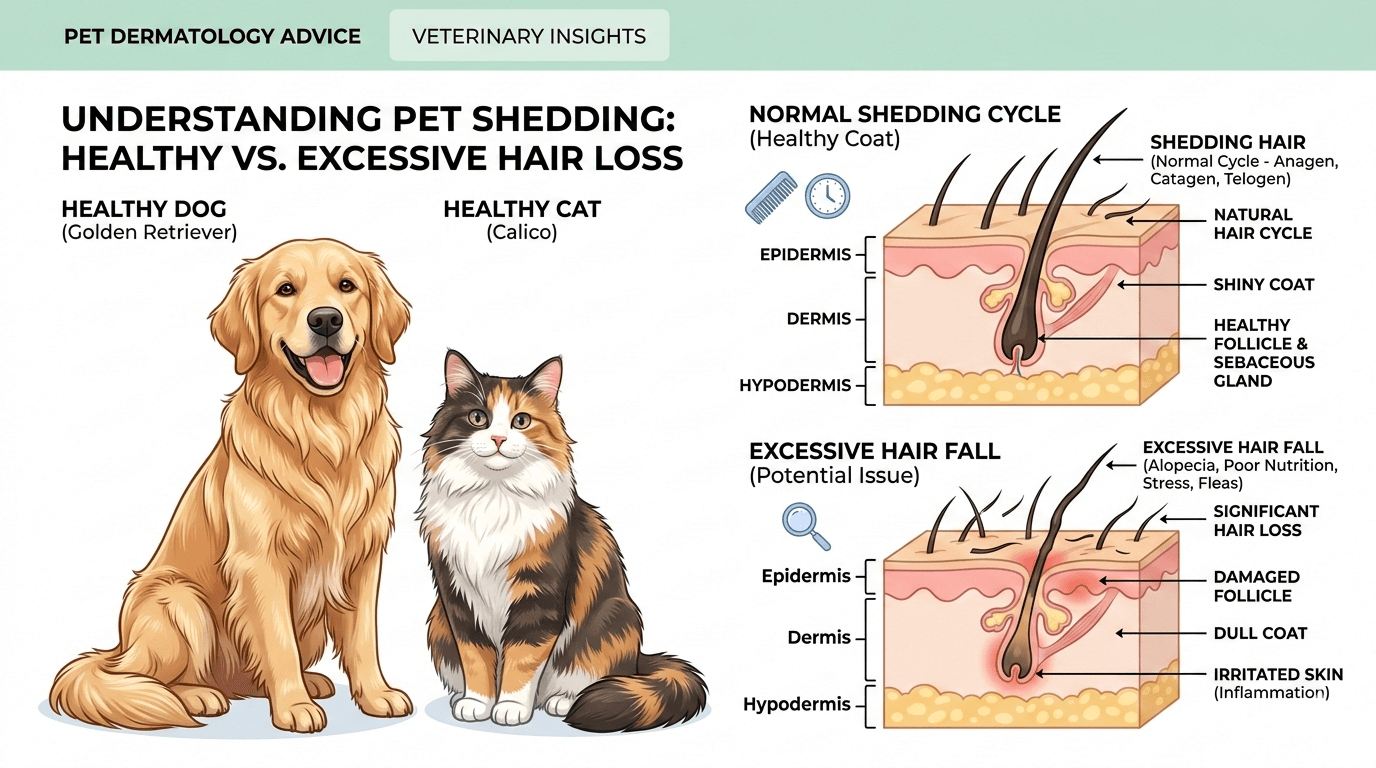
Dog hair fall is a common concern for pet parents. While shedding is a natural biological process in both dogs and cats, excessive dog hair fall can signal skin imbalance, poor grooming, infections, or nutritional deficiencies.
What Dog Hair Fall Really Means
Pets naturally shed old or damaged hair to allow new hair growth and maintain a healthy coat cycle. However, unusual shedding, thinning fur, or patchy hair loss should not be ignored.
If you notice signs such as:
- Patchy hair loss
- Thinning fur
- Visible skin irritation
- Strong skin odor
it often indicates an underlying skin imbalance rather than a simple grooming issue.
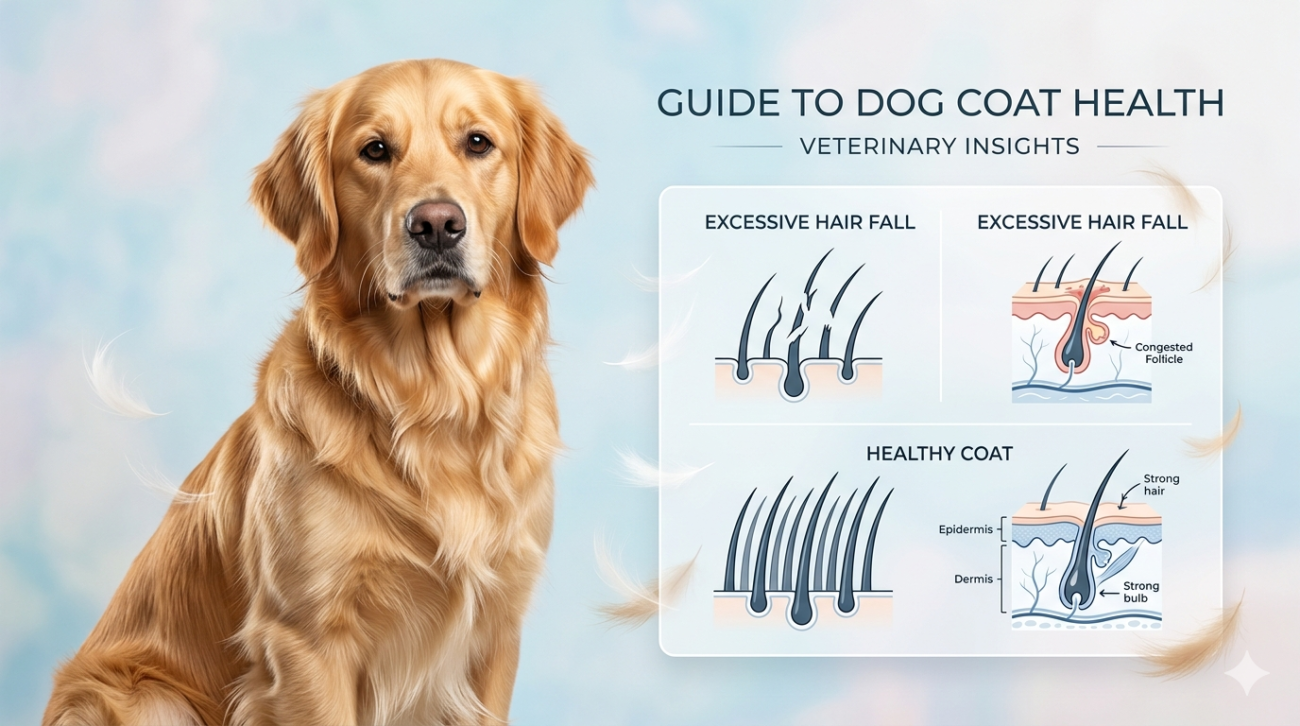
Veterinary dermatology shows that coat condition directly reflects skin health. When the skin environment becomes disrupted, hair follicles weaken, leading to increased dog hair fall.
Understanding the root causes is essential for maintaining long-term skin and coat health.
Why Dog Hair Fall Happens
Dog hair fall usually occurs when the skin barrier is compromised or the skin microbiome becomes imbalanced.
The most common causes include:
- Skin barrier dysfunction
- Fungal or yeast overgrowth
- Nutritional deficiencies
- Hormonal imbalance
- Stress-related grooming behavior
Each of these factors directly impacts hair follicle strength and coat density.
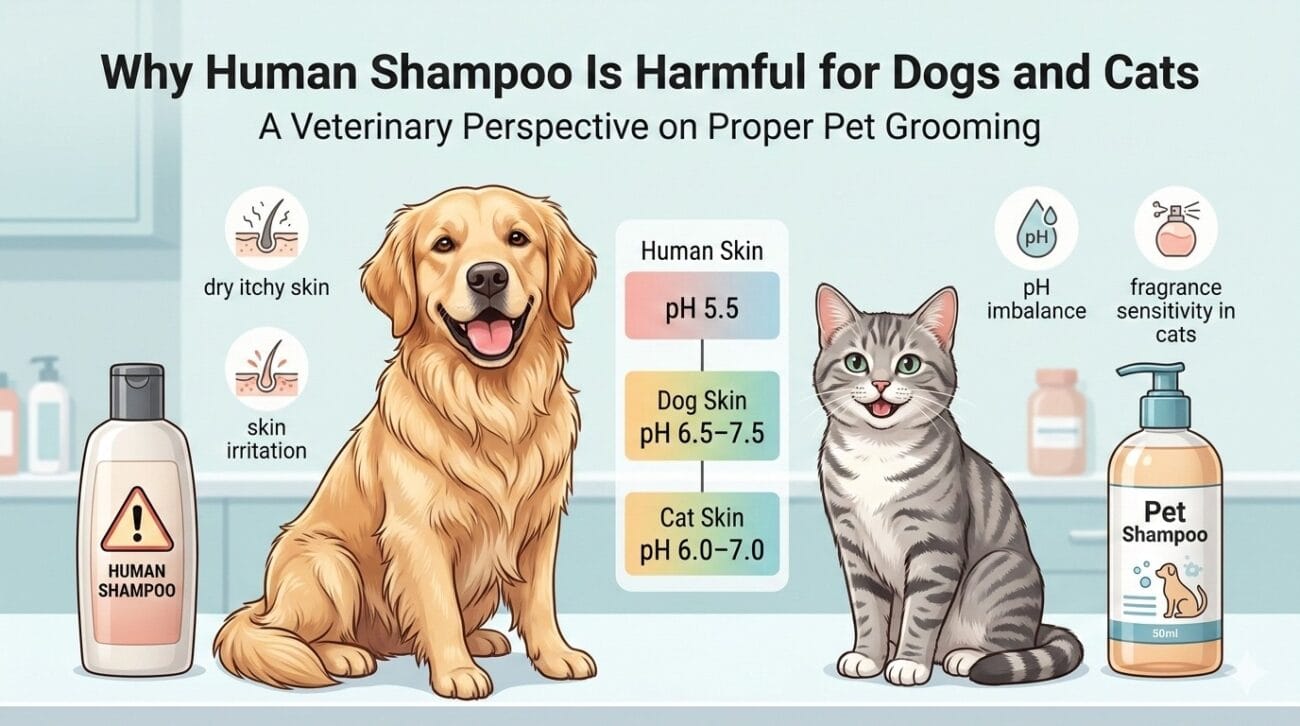
Using gentle, pH-balanced grooming products helps maintain a stable skin environment and reduce unnecessary dog hair fall.
To understand a common grooming mistake, read: Why human shampoo is harmful for dogs and cats.
Using gentle, pH-balanced grooming products helps maintain a stable skin environment and reduce unnecessary shedding.
You can explore RayTails products here:
Amazon:
RayTails Conditioning Dog Shampoo
RayTails Conditioning Cat Shampoo
Flipkart:
RayTails Conditioning Dog Shampoo
RayTails Conditioning Cat Shampoo
Official Website:
Raytails
1. Skin Barrier Damage and Dog Hair Fall
The skin barrier acts as a protective shield that prevents moisture loss and protects against allergens, microbes, and irritants.
When this barrier weakens, dog hair fall increases due to follicle instability.
Common triggers include:
- Harsh shampoos
- Excessive bathing
- Environmental allergens
- Poor grooming routines
Once the barrier weakens:
- Hair follicles lose stability
- Skin becomes dry and irritated
- Shedding increases significantly
Using a gentle shampoo like RayTails Conditioning Dog Shampoo helps cleanse the coat without stripping essential oils.
2. Fungal and Yeast Overgrowth
Pet skin naturally hosts beneficial microorganisms. But when the balance is disrupted, yeast like Malassezia pachydermatis can overgrow.
This imbalance is a major contributor to dog hair fall.
Yeast thrives in:
- Humid environments
- Oily skin
- Compromised skin barrier
Symptoms include:
- Greasy coat
- Strong odor
- Darkened skin patches
- Patchy hair loss
Between baths, pet parents can use RayTails Dry Bath Waterless Grooming to maintain hygiene without damaging the skin barrier.
3. Nutritional Deficiencies and Dog Hair Fall
Healthy coat growth depends on proper nutrition.
Key nutrients include:
Essential fatty acids
Maintain skin hydration and reduce dryness.
Zinc
Supports skin repair and immune function.
Biotin
Improves keratin production and coat strength.
Signs of deficiency include:
- Dull coat
- Weak hair strands
- Slow regrowth
Poor nutrition is a common hidden cause of dog hair fall, and improving diet can significantly enhance coat quality.
4. Hormonal and Behavioral Causes of Dog Hair Fall
Some cases of dog hair fall are linked to internal conditions rather than grooming issues alone.
Hypothyroidism in dogs
This may cause:
- Symmetrical hair loss
- Dry coat
- Slow regrowth
Stress-related overgrooming in cats
This may cause:
- Bald patches
- Skin irritation
- Coat thinning
If dog hair fall becomes severe or persistent, veterinary consultation is recommended.
How to Reduce Dog Hair Fall Naturally
Reducing dog hair fall requires maintaining a healthy skin ecosystem.
Key practices include:
- Use pet-safe grooming products
- Maintain skin barrier balance
- Provide a nutrient-rich diet
- Avoid harsh shampoos
- Support skin microbiome balance
For everyday freshness, pet parents can also use:
These products help maintain coat hygiene and freshness between baths.
Healthy Skin Is the Foundation of Coat Health
A shiny coat is not just about grooming. It reflects healthy skin biology and proper care routines.
When the skin barrier remains strong and the microbial balance stays intact:
- Hair follicles remain stable
- Shedding reduces
- Coats grow naturally thick and healthy
Consistent care with gentle, pH-balanced products like RayTails helps support this balance over time.
Final Thoughts on Dog Hair Fall
Dog hair fall should never be ignored as a cosmetic issue.
It often signals:
- Skin barrier damage
- Microbial imbalance
- Nutritional deficiencies
By focusing on skin health, balanced nutrition, and proper grooming routines, pet parents can significantly reduce dog hair fall and improve coat quality.
With the right care approach and science-based grooming solutions like RayTails, dogs and cats can maintain healthier skin, stronger hair follicles, and naturally vibrant coats.
Why is dog hair fall increasing?
Dog hair fall can increase due to skin infections, poor grooming, nutritional deficiencies, or seasonal changes.
Is dog hair fall normal?
Normal shedding is expected, but excessive dog hair fall with patchy loss or irritation may indicate an underlying issue.
How can I reduce dog hair fall
Use gentle grooming products, maintain a balanced diet, and support skin health to reduce dog hair fall.
One thought on “Dog Hair Fall: Causes & How to Reduce Shedding in Pets”